

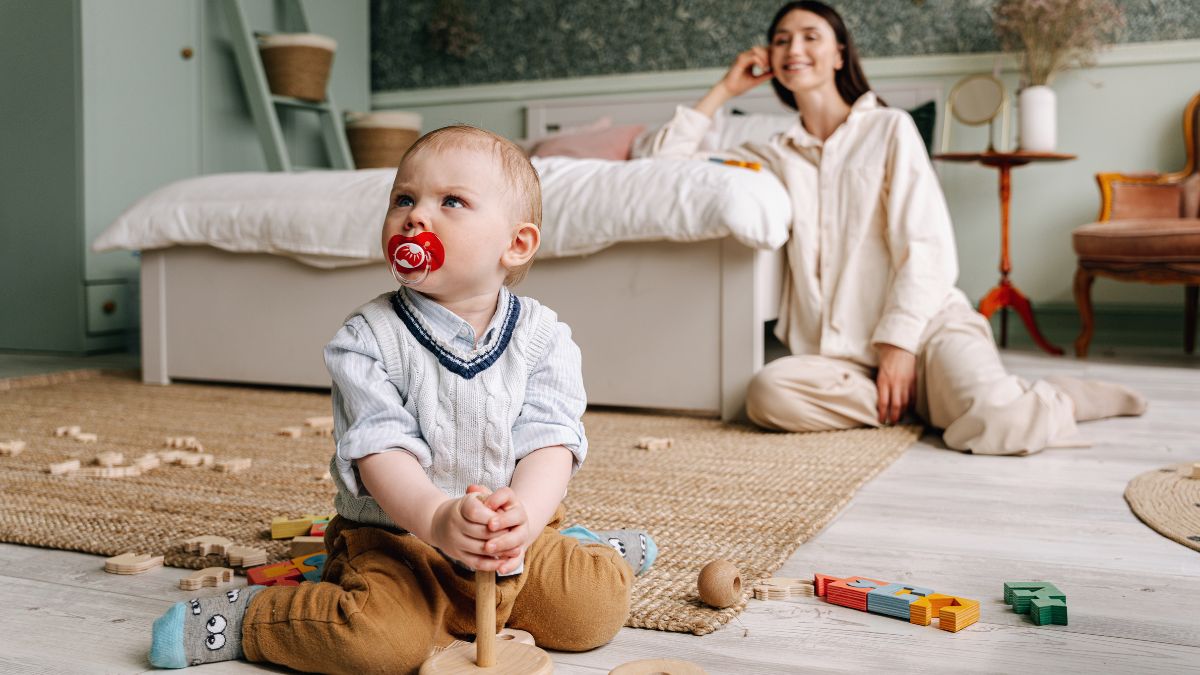
Tips for Transitioning From the Afternoon Nap to Quiet Time

quiet time

As much as we parents would love for our babies to stay babies, they grow up so quickly. And part of this growth involves changes in their established sleep patterns, most notably, naps. Most children give up their nap by 4 years old, but that doesn’t mean that your child doesn’t need naps if they’re displaying tiredness. In fact, many children transition to something that is commonly referred to as quiet time. These periods of quiet time are particularly essential to those children whom still have ‘nap days’. This often occurs when your child is transitioning out of afternoon naps, but may actually ask for, or show tired signs (which indicate they need a nap) a few days a week. It’s actually quite common for preschoolers to need afternoon sleep two or three days a week just to recuperate and be their happy selves. The following may be indicators that your child would benefit from quiet time, or even transitioning to nap days, rather than a set nap every day: • She is regularly fighting the bedtime routine. • She has suddenly become a bedtime jack-in-the-box, popping in and out of her bed. • You can hear her singing, laughing, playing, talking, or getting up and down for an hour (or... more

Leave a Comment’ 0 Comments

The Sleep Lady’s Nap Coaching Tips

nap coaching

I often get asked about nap training, mostly parents want to know if it’s possible, and if it is, how to make sure that their baby naps at the correct time and for the proper length of time. Naps are an essential part of both the baby and toddler sleep requirements. Naps allow little bodies to recharge and process the activities that have happened so far in their day. For some children, naps are a challenge, a daily struggle, and often frustrating for parents. The good news? Naptime doesn’t need to be a source of frustration. You can help your baby sleep during the day so that you can have more happy time and spend less time dealing with tantrums (now, I’m not saying I can eliminate tantrums, those are a normal part of life with little ones, but we can certainly take preventative measures). In order to make sure that your child is getting the most out of their daytime sleep, you need to understand your child’s minimum nap requirements. For the first six months, it’s important to just follow your baby’s sleep cues and help them get as much sleep as they need. Beyond six months, you can begin to follow a flexible schedule for their meals and naps, which can be accomplished with gentle nap coaching. Try... more

Leave a Comment’ 0 Comments

Everything You Need to Know About Baby and Toddler Naps

baby and toddler nap

Many parents assume that nighttime is the only time that we should worry about our baby's and toddler's sleep. What parents often don’t realize is how important naps really are to babies’ development, temperament, and growth. Naps are incredibly important for babies and toddlers, but they are constantly changing, which can lead parents to assume their child isn’t tired, or is ready to give up their naps prematurely. This is simply not true. In fact, there are some basic nap guidelines that apply to nearly every child. Nap Averages Newborn to 5 Months Newborns need as much sleep as possible, which is why I do not recommend sleep coaching until your child is around 6 months. It’s also important to remember that daytime sleep develops after nighttime sleep, and often not until around 6 months. Nap coaching is rarely advised, or successful with babies this young. Often, parents of newborns find that their babies are taking a lot of naps, 4 to 5 naps per day is not uncommon. 6 to 8 Months At this age, most babies need between 2 and 3 naps per day, a morning nap, an afternoon nap, and a one hour (maximum) late afternoon nap to help them bridge the gap between naptime and bedtime (and avoid bedtime resistance due... more

Leave a Comment’ 0 Comments

Baby Sleep: Nap Basics

baby sleep nap

Many parents wonder what a ‘typical’ schedule looks like for their child. The truth is that every baby is different, but there are guidelines that most babies (those six months and older) follow. If you have a smaller child, I would encourage you to follow their natural sleepy-time cues for naps and nighttime sleep, and I will write about newborn sleep in a different article. I’ve already written about the recommended hours of sleep for your baby, so I thought I would revisit the topic of schedules, specifically about naps. The goal of napping is to allow your baby to complete a sleep cycle and get refreshing sleep, which means that the absolute minimum time for a nap is 45 minutes (anything less and you’re looking at a disaster nap). In order to encourage a healthy nap and nighttime schedule, six months is the perfect time to start employing my ‘drowsy but awake’ practice, and put your baby to sleep in their crib awake and aware they are being put down. Doing so will begin to teach your baby to put herself to sleep without the need of a sleep crutch (such as a bottle, nursing, or rocking). A Note From The Sleep Lady: Putting your baby to sleep without a sleep crutch is usually easier to begin to... more

Leave a Comment’ 0 Comments

Introducing Margot Byer, My Featured Gentle Sleep Coach!

Allow me to introduce my Featured Gentle Sleep Coach, Margot Byer, owner of Sleep Haven. She has offered to help answer your sleep questions for the next two weeks on my Facebook page. Thank you Margot! To learn more about Margot.... Margot is a certified Gentle Sleep Coach, trained and certified by myself, Kim West. She has worked as an Occupational Therapist for 30 years, working with children of all shapes and sizes in homes, hospitals and schools. As a Registered Occupational Therapist (O.T.), she helps children develop skills for living a full and independent life, including sleeping. To learn more about working with Margot, visit her... more

Leave a Comment’ 0 Comments

My 2 Year Old is Climbing Out of Bed and Now No One Is Sleeping

Toddler Sleep Problem

Would you like to have me answer your toddler sleep problem in my next video? If so, scroll down and submit your question in the comment section below. I will pick several questions a month to answer and post them here on the blog! If you would rather read than watch my above video then here is the transcript of this week's toddler sleep problem video: Hi, Kim West, The Sleep Lady and today, I’m going to answer Kat’s question from Australia. Here’s what she wrote in: “My 2-year old boy is finally sleeping through the night and having a 1 or 2-hour nap in the afternoon, something I never thought I would see happen. However, in the last few days, he has been waking in the night climbing out of his cot (or crib) with the sides still up. He leaves the room  he shares with his sister and comes in to our room in the middle of the night. Last night it happened at 1:30, 2:40, 4:15 and again at 5a.m. Each time I had to get out of bed, walk him back to his room, put him back in his cot and sing him to sleep.” (Let’s remember to go back to that sing him to sleep.) “One of those times he came in carrying all three of his favourite softies and said he was scared. I reassured him even though I have to admit,... more

Leave a Comment’ 0 Comments

2 Year Old Sleep Tips

2 year old sleep

Parents often seem surprised when their babies suddenly morph into little people right around the 2-year mark, complete with ideas of their own, opinions, and lots of attempts at gaining control. It’s a fun age, I promise, but I’ve found that 2 years can also be a time of sleep challenges, especially if you have recently had any major changes, such as moving to a big bed (which I do not generally recommend until age 3, but it happens), a new sibling, starting potty training, and becoming more verbal (and more opinionated). As parents we often have to pick our battles, and sleep is one battle that we need to ensure has definite boundaries. A good night’s sleep (and consistent naps) is key to a happy toddler, which will make day-to-day challenges and developmental changes much easier. Although they are growing fast, toddlers are still, at their core, dependent upon their parents for guidance. They need structure and boundaries, especially when it comes to sleep. If given half a chance, many parents find that their 2-year-old will go to all ends to resist naps, and may even delay nighttime sleep. This sudden sleep resistance may simply be caused by all of this growth. Additionally, many toddlers also begin to... more

Leave a Comment’ 0 Comments

Sleep Training Methods Demystified

baby sleep training

I recently published an article in answer to a fairly humorous take on sleep training, in which a mother was overwhelmed with the sheer amount of expert advice surrounding baby sleep training. While I chuckled as I read the article, I also sympathized with her. There is an overwhelming amount of information out there about how to sleep train your baby. But what most parents don’t realize is that it all essentially boils down to just a few basic sleep training methods: Cry It Out, or Extinction; Controlled Crying, or Modified Extinction;“No Cry”; and Fading, where the goal is to gradually shift the responsibility of falling asleep from parent to child without (many) tears. As parents, we quickly realize that every baby is different (especially if you have more than one child), and what works for one baby, may not work for another. With so many differing opinions, how can we really make an educated decision about what is really, truly best for our babies? I think that it helps to understand what each method is truly about. I’m going to be upfront and say that I believe my ‘Sleep Lady Shuffle’ is the best of all worlds, but I may be getting ahead of myself. Let’s start at the beginning. Ferber and... more

Leave a Comment’ 0 Comments

The Gentle Sleep Coaching Process

sleep coaching

From Good Night, Sleep Tight: As a loving and responsible parent, I believe we have five essential obligations to our children. We need to take care of their emotional health and their physical health. We need to give them good nutrition and a good education. And we need to make sure they know how to sleep. It’s that simple and it’s important. Sleep coaching (sometimes called sleep training) is nothing more than helping your baby learn to put himself to sleep so that he can successfully nap and (eventually) sleep through the night. Many parents don’t realize that babies do not inherently know how to fall asleep; sleep is a learned skill. When you bring home your infant, you lull them to sleep with just about every activity, since most newborns spend their time either eating, sleeping, or getting his diaper changed; infants sleep much of the day, as they should. Once your child reaches six months of age, her sleep patterns change, and you’ll notice that she is waking for longer periods, and sleep may become a struggle. The good news? Sleep coaching can help! Now, I realize that the phrase ‘sleep training’ causes some parents to shy away from the idea because they automatically think of their baby... more

Leave a Comment’ 0 Comments

Sleep Coaching Goals

sleep coaching

Every parent wants their baby to sleep through the night , but babies are not born knowing how to fall asleep on their own. They’ve been soothed by mom in the womb, and again when they enter the world and throughout infancy. But at some point, waking up every two hours to feed, soothe, and comfort a baby can become exhausting. Many parents find themselves waiting for that magic night at 4 months when their baby sleeps through the night…and then they find themselves at 7 months, 13 months, or 18 months, still waiting, wondering when their baby is going to get the memo that they are supposed to ‘sleep through the night’. Believe it or not, babies are not programmed to put themselves to sleep. They’re conditioned to need help in that department. Think of sleep training like riding a bike: at first, your child doesn’t really know how to use the pedals, but with a little bit of testing and some struggle, he figures it out. He rides unsteadily around the yard on his new bike, training wheels helping him and parents encouraging him from the sidelines through verbal (and sometimes physical) reassurance. Then, one day, he is ready to take a spin without them. It’s a proud moment when you watch him wobble and... more

Leave a Comment’ 0 Comments